

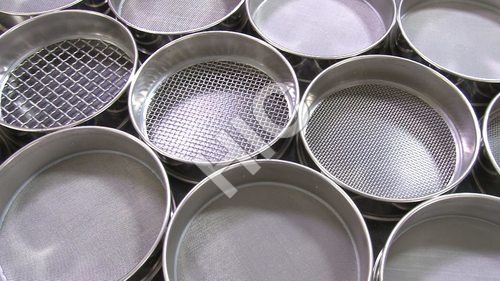
Lab Test Sieves
Product Details:
- Length Standard diameter 8 inch, 12 inch, 18 inch (custom sizes available)
- Surface Treatment Polished
- Hole Shape Round / Square
- Wire Gauge 10 SWG to 60 SWG
- Aperture 36 micron to 5 mm
- Product Type Wire Mesh
- Mesh Type Steel Wire Mesh
- Click to View more
X
Lab Test Sieves Price And Quantity
- 1 Piece
Lab Test Sieves Product Specifications
- Varies by size, typically 300 g to 1.5 kg each
- Stainless Steel (SS 304, SS 316 or as needed)
- Wire Mesh
- Plain Mesh
- Steel Wire Mesh
- Metallic (Silver/Grey)
- 36 micron to 5 mm
- Standard diameter 8 inch, 12 inch, 18 inch (custom sizes available)
- Laboratory Particle Size Analysis, Material Separation, Testing
- Diameter x Height as per specification / requirement
- As per mesh, typical range 0.025 mm to 1.5 mm
- Polished
- SS 304 / SS 316
- Round / Square
- 10 SWG to 60 SWG
- Yes
- Available in multiple mesh sizes per IS/ISO/ASTM standards
- Brass / Stainless Steel Ring
- Standard: 25 mm, 50 mm, 75 mm or as required
- Rolled / Seamless
- ASTM / IS / ISO standards
- Soil, Cement, Pharmaceuticals, Minerals, Food industries
- Available as optional accessories
Lab Test Sieves Trade Information
- Cash on Delivery (COD), Cash Against Delivery (CAD), Cash in Advance (CID), Cheque, Cash Advance (CA)
- 1000 Piece Per Month
- 1 Week
- Yes
- Within a certain price range free samples are available
- Customize Packaging
- Middle East, Africa, Asia
- All India
Product Description
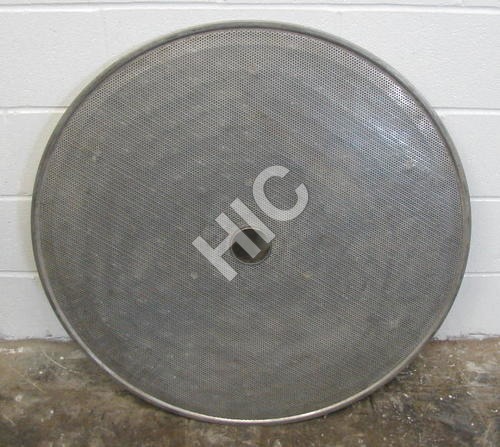
With an aim to become a reputed entity in this domain, we are betrothed in manufacturing, exporting and supplying a wide array of Lab Test Sieves. Offered sieves are used to filter various liquids and powders in laboratories. The provided sieves are designed and manufactured using top notch quality raw materials and advanced techniques at our premises. Along with this, these Lab Test Sieves can be bought by our precious patrons at cost effective rates.
Features:
Features:
- Accurate dimension of hole
- Rust free surface
- High tensile strength
- Perfect finish
Precision Sifting for Versatile Applications
Engineered for laboratory precision, these sieves deliver accurate particle size analyses across numerous industries, including soil testing, pharmaceuticals, minerals, and food processing. The robust brass or stainless steel frames, coupled with a variety of mesh sizes and heights, ensure adaptability for any material separation need.
Standards-Driven Construction and Customization
Each sieve is built to comply with IS, ISO, and ASTM certifications, making them ideal for regulatory and research environments. Numerous options-including edge type, mesh aperture (from 36 micron to 5 mm), and frame material-allow customization to fit specific requirements.
Seamless Integration with Laboratory Setups
With optional top covers, receivers, and stackable design, these sieves integrate smoothly into laboratory processes. Their polished, metallic finish supports longevity, while custom diameters and heights allow for tailored test configurations per project specifications.
FAQ's of Lab Test Sieves:
Q: How are these laboratory sieves used in particle size analysis?
A: These sieves are typically stacked and loaded with a material sample, then subjected to shaking or sieving action to separate particles based on mesh size. This process helps analyze and classify materials by size for quality control and research applications in industries like soil, cement, pharmaceuticals, and food.Q: What standards do these test sieves comply with?
A: Our sieves are manufactured in line with ASTM, IS, and ISO standards, ensuring reliable and repeatable results for laboratory testing, material separation, and certification processes.Q: When should I choose brass rings versus stainless steel rings for my sieves?
A: Brass-ringed sieves are commonly used for finer materials or where economic options are needed, while stainless steel rings are preferable for corrosive environments, frequent cleaning, or where maximum durability is required.Q: Where can these laboratory sieves be used?
A: These sieves can be utilized in laboratories, quality control departments, research centers, and production facilities of soil, cement, minerals, pharmaceuticals, and food industries, or wherever precise particle size distribution is essential.Q: What is the process for selecting the right mesh size and sieve height?
A: Select the mesh size and sieve height based on the material's particle size range and application requirements. Refer to IS/ISO/ASTM standards to match your testing procedures and choose from available diameters and heights for optimal stack compatibility.Q: What benefits do rolled or seamless edge types provide?
A: Rolled or seamless edge construction increases durability, ensures integrity during stacking, and prevents leakage or sample loss, contributing to reproducible testing outcomes.Q: Are top cover and receiver accessories necessary for every application?
A: While not mandatory, top covers and receivers help contain material, minimize spillage, and collect fines, making them recommended accessories for enhanced precision and cleanliness during sieving tasks.Tell us about your requirement

Price:
Quantity
Select Unit
- 50
- 100
- 200
- 250
- 500
- 1000+
Additional detail
Mobile number
Email

Other Products in 'Sieves' category

Contact Details
- 42, Abdul Rehman Street, Opp. Corporation Bank, Ground Floor,Mumbai - 400003, Maharashtra, India
- Phone : 07313726074
- Send Inquiry
 Send Inquiry
- Mr Manish D (Sales Head)
- Mobile : 07313726074



 |
HINDUSTAN INDUSTRIAL CORPORATION
All Rights Reserved.(Terms of Use) Developed and Managed by Infocom Network Private Limited. |
