

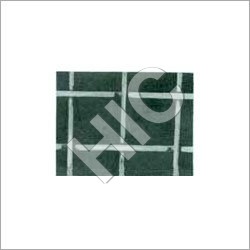
Plain Weave Wire Mesh
Product Details:
- Aperture 0.05mm to 100mm
- Hole Shape Square Hole
- Surface Treatment Anti-oil Cleaning
- Wire Gauge 0.025mm To 10 mm
- Product Type Wire Mesh
- Mesh Type All Types Of Wire Mesh
- Mesh Style Plain Mesh
- Click to View more
X
Plain Weave Wire Mesh Price And Quantity
- 1 Roll
Plain Weave Wire Mesh Product Specifications
- All Types Of Wire Mesh
- 0.025 To 10 Millimeter (mm)
- Square Hole
- 0.05mm to 100mm
- Plain Mesh
- 0.025mm To 10 mm
- Wire Mesh
- Anti-oil Cleaning
Plain Weave Wire Mesh Trade Information
- Cash on Delivery (COD), Cash Against Delivery (CAD), Cash in Advance (CID), Cheque, Cash Advance (CA)
- 5 Roll Tones Per Month
- 1 Week
- Yes
- Within a certain price range free samples are available
- Customize Packaging
- Middle East, Africa, Asia
- All India
Product Description
Based on the latest technological advancements, we are offering a premium quality range of Wire Mesh (Plain Weave) that is used as a protective guard or curtain. The offered mesh is used in different industrial sector such as chemical rubber, fertilizers, sugar mills, petrochemical and many more. This wire mesh is manufactured under the guidance of our skilled professionals by inculcating modern techniques and quality assured raw materials. Furthermore, we provide this Wire Mesh (Plain Weave) in various lengths and thicknesses as per the requirements laid down by our esteemed clients.
Features:
-
Abrasion resistance
-
Rust proof
-
High tensile strength
-
Less maintenance
Specifications:
One warp wire binds always one chute wire and visa-versa. Rigid form of binding, exact mesh opening available from 1" opening to 0023" opening. All weaves according ISI / ASTM / BSS are supplied in plain weave
Wire material : 304, 316, 304L, 316L, 310, Monel 400
| Description | Metal | Mesh | Diameter of wire | End uses |
| Square mesh/wire cloth (hardware) | Galvanished mild steel H.D.P Nylon etc | 1 Mesh to 40 Mesh per liner inch | 3.25 mm (10G) to 0.193 mm (36 Gauge) | Sieving Mosquito netting partition general use for domestic and industrial work |
| In any width up to 2000 mm Pre-Crimped wire for heavy mesh in warps & wett | ||||
| Square mesh wire cloth/industrial wire cloth/screen and mesh | Stainless steel/phose bronze or any grade of S.S. wire 304 & 316 quantity Nylon | 2 Mesh to 40 Mesh | 3.25 mm (10 G) to 0.193 mm (36 Gauge) | Chemical rubber, Sugar mills, Fertilizers, Ceramic, Cement, Petrochemical & other industrial use |
In any with up to 2000mm. Pre-crimpled wire for heavy mesh in warps weft and with out border
Precision and Range in Mesh Specifications
Our Plain Weave Wire Mesh is engineered with a broad spectrum of specifications, offering apertures from 0.05mm up to 100mm and wire diameters between 0.025mm and 10mm. This versatility ensures seamless use across diverse applications, providing both fine and coarse filtering solutions.
Surface Quality and Cleanliness
With an anti-oil cleaning surface treatment, our wire mesh remains free from residues and contaminants, guaranteeing improved performance and longevity. This treatment is especially beneficial in industries where hygiene and cleanliness are paramount.
FAQ's of Plain Weave Wire Mesh:
Q: How is plain weave wire mesh manufactured and what makes the plain style distinct?
A: Plain weave wire mesh is created by weaving wires with equal diameters both horizontally and vertically, forming a strong, square aperture. The plain weave style ensures uniform mesh size and high durability, making it suitable for demanding industrial applications.Q: What range of apertures and wire diameters is available for this mesh?
A: Our plain weave wire mesh is available with apertures from 0.05mm to 100mm and wire diameters ranging from 0.025mm to 10mm. This flexible range allows for precise selection to match various filtration, separation, and protection needs.Q: Where can plain weave wire mesh be used most effectively?
A: It is highly effective in industries such as chemical processing, mining, pharmaceuticals, food production, and construction. Its square hole design supports uses like particle sizing, filtration, sieving, and screening.Q: What process is followed for maintaining the mesh's cleanliness?
A: Each mesh undergoes an anti-oil cleaning process as part of the surface treatment, ensuring that the mesh remains free of oily residues and other contaminants, which enhances its suitability for sensitive or critical applications.Q: How does the square hole design benefit industrial usage?
A: The square aperture provides consistent particle separation, allowing precise control over screening and filtration processes. This design also delivers stability and even weight distribution across the mesh surface.Q: When should I use a wider versus a finer aperture for my application?
A: Use a finer aperture (closer to 0.05mm) for precise filtration or when capturing very small particles. Select broader apertures (up to 100mm) for bulk material processing or larger particle separation, depending on your specific requirements.Tell us about your requirement

Price:
Quantity
Select Unit
- 50
- 100
- 200
- 250
- 500
- 1000+
Additional detail
Mobile number
Email

Other Products in 'Wire Mesh' category

Contact Details
- 42, Abdul Rehman Street, Opp. Corporation Bank, Ground Floor,Mumbai - 400003, Maharashtra, India
- Phone : 07313726074
- Send Inquiry
 Send Inquiry
- Mr Manish D (Sales Head)
- Mobile : 07313726074



 |
HINDUSTAN INDUSTRIAL CORPORATION
All Rights Reserved.(Terms of Use) Developed and Managed by Infocom Network Private Limited. |
