

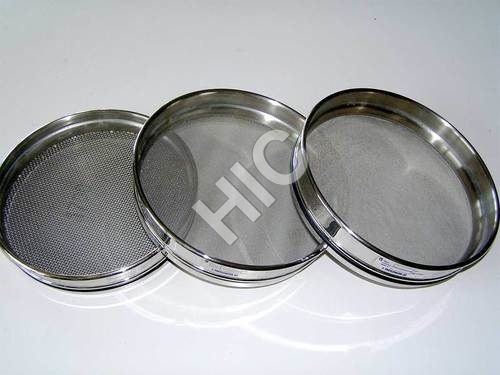
Laboratory Sieves
Product Details:
- Length Standard diameter: 8 inches, 12 inches, 18 inches
- Surface Treatment Polished/Brushed
- Aperture 20 micron to 10 mm
- Wire Gauge 14 to 200 SWG
- Hole Shape Round
- Product Type Laboratory Sieve
- Mesh Type Woven mesh
- Click to View more
X
Laboratory Sieves Price And Quantity
- 1 Piece
Laboratory Sieves Product Specifications
- 14 to 200 SWG
- 20 micron to 10 mm
- 0.04 mm to 2.5 mm
- Laboratory Sieve
- Round
- Woven mesh
- 0.5 kg to 2.5 kg depending on size
- Silver
- Particle size analysis, material separation
- Standard diameter: 8 inches, 12 inches, 18 inches
- Various standard sizes (customizable)
- SS 304/316
- Plain weave
- Polished/Brushed
- Stainless Steel (SS 304/316)
- Yes
- Up to 200C
- Seamless Jointed
- Brass or Stainless Steel Frame
- Wet & Dry Sieving
- Plain / Flanged
- ISI / ASTM / ISO Certified
- 40 mm, 50 mm, 75 mm
- Optional Accessories
Laboratory Sieves Trade Information
- Cash on Delivery (COD), Cash Advance (CA), Cash Against Delivery (CAD), Cash in Advance (CID), Cheque
- 1000 Piece Per Month
- 1 Week
- Yes
- Within a certain price range free samples are available
- Customize Packaging
- Middle East, Africa, Asia
- All India
Product Description
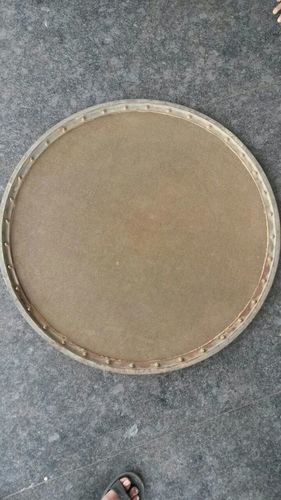
We are engaged in providing an optimum grade array of Laboratory Sieves. Used in fine filtering, the offered sieves are designed and manufactured using excellent quality stainless steel wires at our premises. The provided sieves are best to find their applications in pharmaceutical, chemicals and mineral industries. Along with this, our valuable patrons can easily purchase these Laboratory Sieves at cost effective rates from us.
Features:
- Very tiny hole
- Long lasting life
- Easy to use
- Fine finish
Precision-Crafted for Reliable Analysis
Manufactured using high-grade stainless steel (SS 304/316) or quality brass, these laboratory sieves feature seamless jointed frames and woven mesh styles to ensure consistent, accurate results in particle sizing. The robust build and compliance with global standards (ISI/ASTM/ISO) make them suitable for professional environments.
Versatile Performance for Wet & Dry Sieving
Designed to perform efficiently in both wet and dry material separation applications, these sieves accommodate various particle sizes with mesh options from 20 microns to 10 mm. They maintain structural stability at temperatures up to 200C, making them ideal for a broad spectrum of testing scenarios.
Customizable Dimensions and Accessories
Available in different heights (40 mm, 50 mm, 75 mm) and standard diameters (8, 12, 18 inches), these sieves can be tailored to meet specific laboratory or industrial needs. Optional accessories such as top covers and receivers help streamline processes and maintain sample integrity.
FAQs of Laboratory Sieves:
Q: How do I choose the correct laboratory sieve for my application?
A: Select a sieve based on the desired aperture size (20 microns to 10 mm), wire gauge, and mesh type required for your sample. Consider the frame material (brass or stainless steel), compliance standard (ISI, ASTM, ISO), and whether you need features like temperature resistance (up to 200C) or stackability for your testing process.Q: What are the benefits of using ISI / ASTM / ISO certified laboratory sieves?
A: Certified sieves ensure consistent quality, measurement accuracy, and global compliance, facilitating reliable particle size analysis and repeatable results across laboratories and industries.Q: When should I use a stainless steel frame instead of a brass frame?
A: Stainless steel frames (SS 304/316) are recommended for corrosive environments, higher temperature resistance (up to 200C), and for improved durability when used with wet sieving. Brass frames are suitable for general laboratory use where corrosion is not a concern.Q: Where can these laboratory sieves be utilized?
A: These sieves are widely applied in research laboratories, material testing labs, quality control departments, and industries relying on particle size analysis, such as pharmaceuticals, construction, food processing, and chemicals.Q: What is the sieving process using these frames?
A: Insert the material sample into the appropriate sieve stack. For dry sieving, gently vibrate or shake; for wet sieving, rinse with water or the required solvent. Use optional top covers and receivers to prevent sample loss and collect the segregated material efficiently.Q: How does stackability enhance the usage of laboratory sieves?
A: Stackable design enables multiple sieves to be used simultaneously, allowing separation and analysis of different particle sizes in a single operation and improving testing efficiency.Tell us about your requirement

Price:
Quantity
Select Unit
- 50
- 100
- 200
- 250
- 500
- 1000+
Additional detail
Mobile number
Email

Other Products in 'Sieves' category

Contact Details
- 42, Abdul Rehman Street, Opp. Corporation Bank, Ground Floor,Mumbai - 400003, Maharashtra, India
- Phone : 07313726074
- Send Inquiry
 Send Inquiry
- Mr Manish D (Sales Head)
- Mobile : 07313726074



 |
HINDUSTAN INDUSTRIAL CORPORATION
All Rights Reserved.(Terms of Use) Developed and Managed by Infocom Network Private Limited. |
